

The Next Great AI Revolution May Not Be on Your Screen
Markets rose despite mixed economic signals. Stocks posted gains in Q2, with stocks climbing on the back of strong corporate earnings, resilient consumer spending, and ongoing enthusiasm around AI-related investments.
Author
Chris McCall
Over the past thirty years, we've experienced one of the greatest technological transformations in history. We built the digital economy.
We connected billions of people through the internet. We put powerful computers in our pockets. We moved our photos, music, banking, shopping, communication, and much of our work into the digital world. More recently, artificial intelligence has dramatically expanded what computers themselves can do.
But I've found myself wondering whether all of that has simply been laying the foundation for something even bigger.
What if the next chapter of AI isn't primarily about making computers smarter?
What if it's about making the physical world smarter?
Today, most of our experience with AI still takes place in the digital world, whether it’s answering questions, drafting emails, analyzing documents, writing software, creating images, or even talking to us. Those are remarkable advances, but AI is still primarily working with information rather than interacting with the physical world.
The next frontier may be what is increasingly being called physical AI - intelligence that doesn't just process information but interacts with the world around us. Machines that can interpret their surroundings, manipulate objects, learn from experience, adapt when circumstances change, and work safely alongside people.
At first glance, that might sound like science fiction. But it's already beginning.
Consider a hospital.
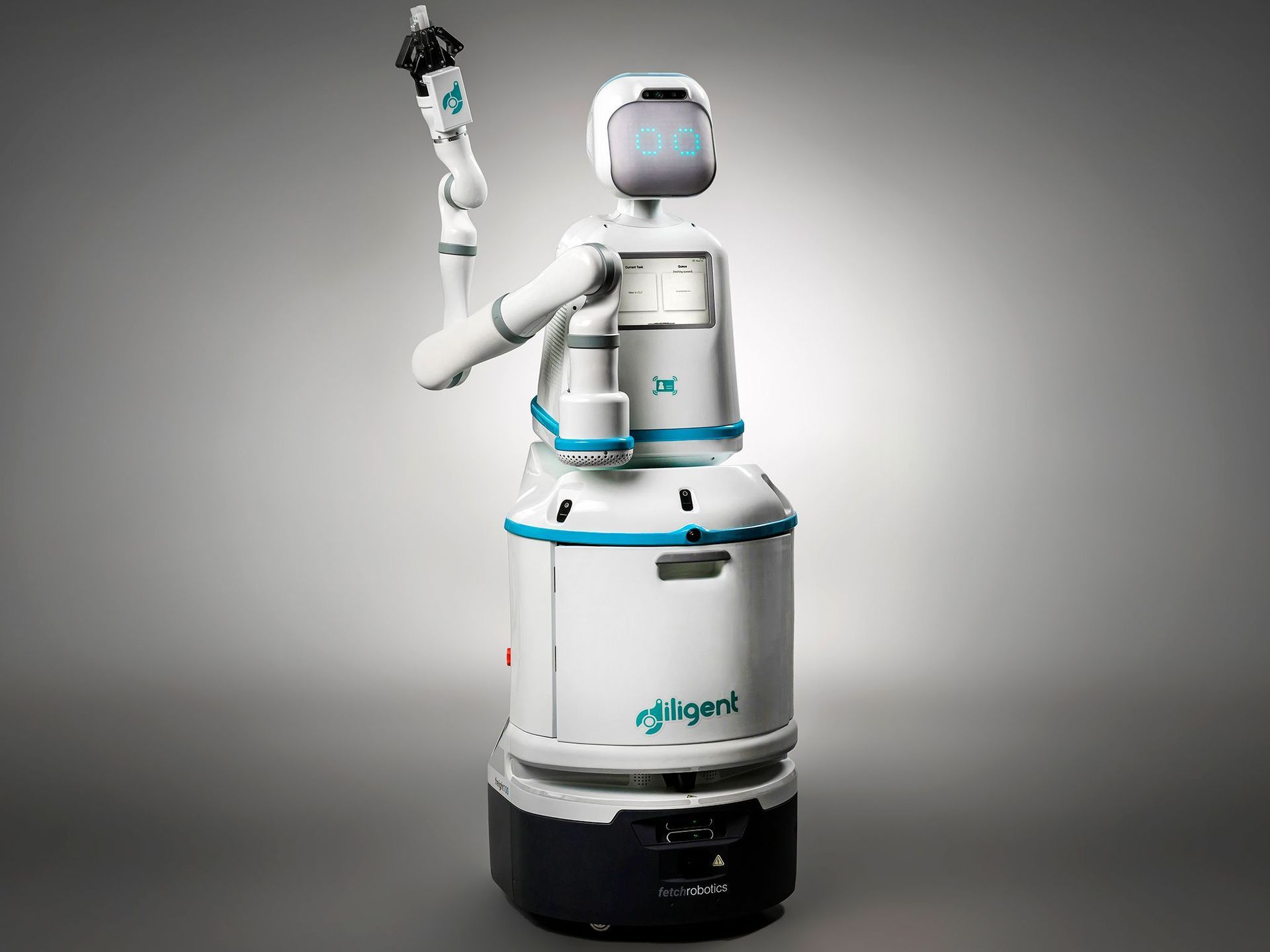
Diligent Robotics has deployed a robot called Moxi in more than 25 hospitals around the country. Rather than performing surgery or diagnosing patients, Moxi does something much more ordinary. It moves medications, supplies, and other items around the hospital.
At Children's Hospital Los Angeles, Moxi has completed more than 40,000 deliveries, representing more than 16,000 hours of work that employees didn't have to spend transporting supplies and medications.
That may not sound revolutionary. But perhaps that's precisely the point.
Every hour a nurse, pharmacist, or other highly trained employee doesn't spend walking supplies through a hospital can potentially be spent doing work that requires human judgment and expertise. And the technology is getting better.
The newest Moxi has significantly more onboard computing power and faster perception, helping it respond to crowded hallways, elevators, carts, and people moving unpredictably around it. Experiences gathered by deployed robots can also feed back into Diligent's training systems, helping the technology improve over time.
Something similar is beginning to happen in manufacturing. For decades, automobile factories have used industrial robots. Traditional automation works best in extremely predictable environments: the same part, in the same location, requiring the same movement, thousands of times.
Physical AI could begin changing that equation.
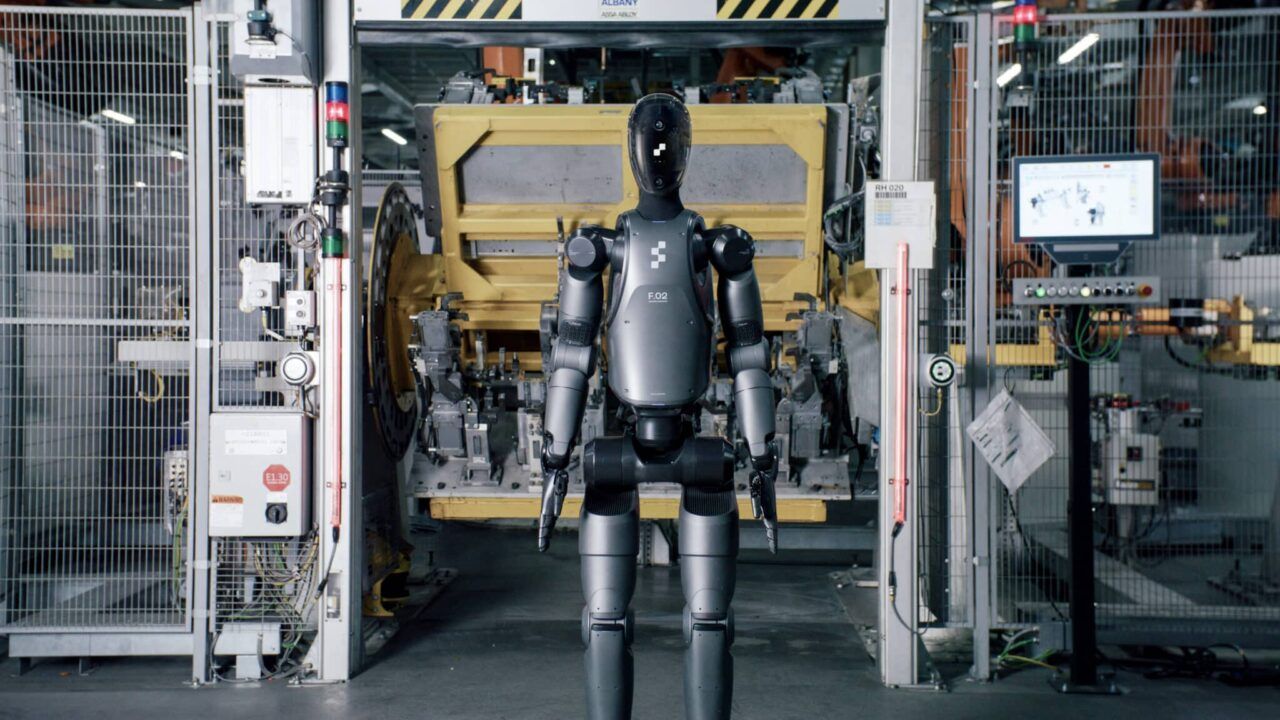
At BMW's manufacturing plant in Spartanburg, South Carolina, a humanoid robot developed by Figure AI worked alongside BMW's production systems for months. BMW says the robot supported production of more than 30,000 BMW X3 vehicles, performing the repetitive job of inserting sheet-metal parts into fixtures for welding.
BMW is now testing Figure's next-generation robot on a more complicated task. Parts can arrive in different orientations, requiring the robot to identify them, pick them up, and place them in the proper sequence for production.
The distinction is important.
Traditional robots are extraordinarily good at doing exactly what they've been programmed to do. Physical AI holds out the possibility that machines can increasingly perceive what's happening around them and adjust when the world doesn't behave exactly as expected.
And the evidence extends well beyond hospitals and factories. Amazon now operates more than one million robots across its fulfillment network and is using AI to help coordinate how they move and work together. Waymo, meanwhile, is providing more than 500,000 fully autonomous rides each week, with vehicles using AI to navigate the unpredictability of real streets and traffic. The transition from digital intelligence to machines that can act in the physical world may be further along than many of us realize.
Now consider how much of our economy still depends on physical work - from manufacturing and construction to agriculture, healthcare, transportation, and countless other industries. If AI begins assisting in these industries the way it has begun assisting knowledge workers, the economic implications could be enormous.
That doesn't mean robots won't replace some jobs or tasks. They almost certainly will. But across much of the developed world, birth rates are declining while populations are aging. That increases demand for essential services even as many industries already struggle to find enough workers.
In that environment, automation may increasingly be about more than replacing labor. It may be about allowing a smaller workforce to accomplish more.
History has shown us that better tools can dramatically increase what people are capable of accomplishing. The tractor did it for farmers. The computer did it for knowledge workers. Physical AI could become another generation of those tools.
Of course, recognizing the potential of a technology is very different from knowing how quickly it will develop or what investors should be willing to pay for it.
Companies are spending extraordinary amounts of money on AI infrastructure: semiconductors, data centers, networking equipment, power generation, and other systems. It's reasonable to wonder whether some of that spending has gotten ahead of the economic returns AI will ultimately produce.
History tells us both things can be true at once.
The internet transformed our lives, but that didn't prevent capital from being lost during the dot-com era. AI could follow its own version of that pattern. Some of today's investment may prove excessive, and today's apparent winners won't necessarily be tomorrow's.
But there's another possibility worth considering.
What if some of the computing infrastructure being built today ultimately supports applications far beyond the chatbots and AI assistants getting most of the attention?
If intelligence increasingly finds its way into factories, hospitals, warehouses, vehicles, construction equipment, farms, and millions of other machines, demand for computing could take forms we are only beginning to imagine.
The answer may ultimately be some of both - periods of excessive investment alongside a technological transformation that proves much larger than today's applications suggest.
That distinction matters for investors. A great technology does not automatically make every company associated with it a great investment. Price matters. Competition matters. Capital requirements matter. Transformative technologies rarely develop in a straight line.
At Journey Beyond Wealth, we've always believed that successful investing is less about reacting to headlines and more about understanding durable trends that may shape the world for years or even decades to come.
No one can predict exactly how quickly physical AI will develop, what form the machines will ultimately take, or which companies will emerge as the winners. But several long-term forces are beginning to converge:
- Advances in artificial intelligence
- Increasingly powerful computing
- Rapidly improving robotics and sensors
- Aging populations
- Persistent labor shortages
- The ongoing need for greater productivity
None of that tells us what a particular AI or robotics company will be worth next year. But taken together, these forces suggest that something important may be happening.
We've spent the last thirty years making information smarter.
The next thirty may be about making the physical world smarter.
If that's true, we're still in the early chapters of what could become one of the most significant economic transformations of our lifetime.
Journey Beyond Wealth (“JBW”) is an Investment Advisor registered with the SEC. All views, expressions, and opinions included in this communication are subject to change. Registration of an investment advisor does not imply a certain level of skill or training. This communication is not intended as an offer or solicitation to buy, hold or sell any financial instrument or investment advisory services. Any information provided has been obtained from sources considered reliable, but we do not guarantee the accuracy, or the completeness of, any description of securities, markets or developments mentioned. We may, from time to time, have a position in the securities mentioned and may execute transactions that may not be consistent with this communication's conclusions. Past performance does not guarantee future performance. Future returns may be lower or higher. Investments involve risk. Investment values will fluctuate with market conditions, and security positions, when sold, may be worth less or more than their original cost. Please contact us if there is any change in your financial situation, needs, goals or objectives, or if you wish to initiate any restrictions on the management of the account or modify existing restrictions.